Towers Family Chiropractor

Helping You to Better Health Naturally

  • Home
  • About Us
  • Our Chiropractic Services
    • Chiropractic Care
    • Acupuncture
    • Nutrition Services
  • Helpful Videos
    • Posture Screening for Scoliosis and Posture Imbalances
    • Spinal Exercises
  • Patient Forms
  • FAQ
  • Contact Us
  • Chiropractic Solutions
  • Children’s Adjustments
  • Monica’s Recipes
  • Nutrition News
  • Healthy Habits
  • Patient Testimonials

Chicory Root Chaga Tea with coconut milk or oil

March 24, 2020 by towers

While you can make this tea with just chicory root, if you have chaga it is a nice combination.  Chaga is a mushroom that grows on birch trees in northern latitudes. You may not find it locally–I order online (from Optimally Organic).  It was used traditionally as a medicinal tea for general well-being/immune system support and longevity and is very high in anti-oxidants as measured by ORAC.  It does not contain caffeine. Be sure to get wild-crafted Chaga that was harvested from birch trees growing in northern Canada.   The best part is that Chaga tea tastes good and you could just have it alone!

Roasted chicory root has a long history of being used as a coffee substitute;  it makes this tea stronger and blacker with a bitter component that is similar to coffee.  Another bitter root to combine with chicory is burdock root which is one of my favorites as a coffee substitute–I use about 3/4 tsp. organic, dried and cut burdock root to 1 tsp. chicory root.

There are lots of options for what you may want to add for flavor and medicinal value–cinnamon, cardamom, licorice root, burdock root, anise seed, fennel seed, dried and ground organic orange rind, vanilla, cocoa powder.  I usually also add a tablespoon of collagen powder (Great Lakes) and I like to add  raw cocoa powder sometimes for ” hot chocolate”. But these are optional ingredients.  The coconut milk makes it rich and gives it body. This drink will remain “low carb” if you avoid adding any form of concentrated sugar to it and use stevia or monk fruit instead.

One other note, if you prefer to use coconut oil instead of milk, you can get this to emulsify in your tea by adding lecithin also and then blending with an immersion blender (it doesn’t froth up unless you blend it).  Lecithin powder made from organic sunflower seeds is now available online and may be in your health food store; this is the best type of lecithin to use as I don’t like the ones made from soy.  If you don’t use the lecithin, the oil will pool on the top of your tea.

1 tsp. dried Chaga granules

1/2 tsp. organic orange peel granules (optional)

1/2 tsp. dried burdock root or dandelion root (optional)

1 tsp. roasted chicory root granules

2 cups boiling water

stevia extract or monk fruit powder to sweeten to taste if desired

1/4 tsp. vanilla extract

1/4 cup classic coconut milk (from dry coconut milk powder or Native forest organic in a can) OR 1 Tbsp of coconut oil and 1 tsp. of lecithin OR if you are not sensitive to dairy 2 Tbsp cream

Optional:  2 Tbsp. Great Lakes Collagen powder and 1 tsp. cocoa powder

Place chaga (or other herb tea) and chicory in a quart-sized glass mason jar. Add the boiling water (be sure a spoon is in the jar so it doesn’t crack).  Cap the jar and let sit for at least 15 minutes to extract.  Now if you want your tea very warm strain it into a pan and add the coconut milk and warm it until it just simmer before pouring into a mug and adding the rest of the ingredients.   Otherwise, strain the tea into a mug and add the rest of the ingredients.
If you use coconut oil and lecithin instead of coconut milk, add these two ingredients when the strained tea is in the pan.  Add your other ingredients and use an immersion blender to froth this mixture up.  Warm it up if desired by bringing just to a simmer.  Drink warm.

Filed Under: Monica's Recipes Tagged With: chicory root tea, coffee substitute, dairy-free hot beverage

Celeriac Soup

March 2, 2020 by towers

If you can find celeriac or celery root in your grocery store, you should try this soup.  It’s a low starch vegetable that has a wonderful celery-like flavor, but it’s meatier than celery so it lends a creamy texture to soups when they are pureed.  Our Co-op here in Roanoke often has organic celeriac so I have been using them in soup regularly this winter.  The cauliflower soup recipe I posted can be made with celeriac–just omit the carrot and if you want the potato and add 1 celeriac root.

This simple soup is more like celery soup but without dairy–except for the ghee which is well tolerated by many folks sensitive to dairy.  The soup is blended once the vegetables are cooked so no need to finely chop them.


Serves 4

1 large celeriac root, peeled and cubed into 1 inch pieces

1 very large (about 4 inches in diameter) yellow onion, chopped

1/3 cup of ghee

3 stalks celery, chopped

1 small potato, chopped (optional)

4 cups of broth or water ( I used water)

1/4 cup fresh dill weed, chopped fine or 1 tsp. ground dill seed (optional)

salt to taste

black pepper, optional


In a soup pot, melt the ghee.  Add the onion and saute over medium heat for about 5 minutes giving an occasional stir.  Wash and chop the other veggies while the onion is sauteing.  Add the other vegetables and continue to heat over medium heat giving an occasional stir for another few minutes.  Add the broth or water.  Bring to a boil and immediately reduce the heat to low to keep the soup cooking at a simmer for about an hour or until the vegetables are very tender and easily pierced.  Remove from heat and carefully blend with an immersion blender until creamy.  Add salt, and pepper if desired, to taste.  Serve hot garnished with dill.


Filed Under: Monica's Recipes

Grain-free Hot Cereal

January 26, 2020 by towers

Many people think their diet will be inadequate (especially in fiber) without including grains.  Yet many other people are perfectly happy and healthy without eating grains.  Whether one is following a keto or low carb or low inflammatory diet, there can be plenty of fiber and nutrients in a grain-free diet.  And it is not hard to replace some grain dishes, with ones containing hi-fiber, nutritious ingredients but no grain products.  If you like hot cereal in the morning, give this a try.  Some compare it to cream of wheat.

Serves 2

1/4 cup organic coconut flour

2 Tbsp. organic flax seed, ground to a powder in blender

1 cup water

1/2 cup coconut milk (optional, can be replaced by another 1/2 cup of water)

1/2 organic apple, chopped fine

1/4 cup blueberries, optional, fresh or frozen

2 Tbsp. chopped walnuts, optional

1-2 Tbsp. collagen powder

1 tsp. cinnamon

1 Tbsp. ghee or butter

1/4 tsp. monk fruit powder to sweeten, optional

Bring water to a boil and reduce heat to low.  Add apple and cinnamon, cover, and simmer 5 minutes until tender.  Add ground flax and coconut flour and stir well.  If using, add coconut milk , collagen powder,  walnuts and blueberries.  Continue to stir over low heat until evenly heated.  Add water if desired to consistency of your choice.  Remove from heat.  Add ghee and sweeten with monk fruit to taste if desired. Serve immediately.


Filed Under: Monica's Recipes

Healing Moisturizing Oil

January 13, 2020 by towers

This is a recipe too but one for topical use only!    Castor oil is very healing (to learn more, read “The Oil That Heals” by Dr. William McGarey) and belongs in everyone’s medicine cabinet.  Many people have used it as a castor oil pack as recommended by Edgar Cayce and McGarey’s book explains how to do this.   It is best used topically as the book explains unless you know what you are doing and wish to use it internally as a laxative!

However, to use topically as a massage or moisturizing oil it is too thick and sticky to use alone.  Diluting it with a highly-absorbed oil such as argan is the key for using this therapeutic oil as a healing massage oil.  The essential oils make it a delight to the senses and add to its healing properties.  If you get massages, bring it to your therapist and ask her/him to use this instead of standard massage oils.

In general, for massage oils, use up to 15 drops total of essential oil(s) per ounce of castor/argan oil mixture.  Make it in small batches (2-4 ounces)  for freshness.


1 part castor oil ( be sure to buy organic, cold-pressed, solvent-free)

1 part argan oil (organic, cold-pressed, or jojoba oil)

a couple drops of vitamin E oil (optional)

frankincense  essential oil

lavender essential

Pour equal parts castor oil and argan oil into a glass bottle.  Cap and shake well. ( I use a 4 ounce brown glass spray bottle that the argan oil comes in.)  Add the essential oils one drop at a time so you can count them.  Add the vitamin E oil if desired.  Shake again.  Massage into sprain/strains, sore or inflamed areas, tight muscles, feet, hands.  Also can be used on the face by bathing the face first with a warm wash cloth, putting a couple drops of the blend on the wash cloth, and brushing over the face–very light and feels great!


Filed Under: Healthy Habits, Monica's Recipes

Shiitake Mushroom Soup

December 9, 2019 by towers

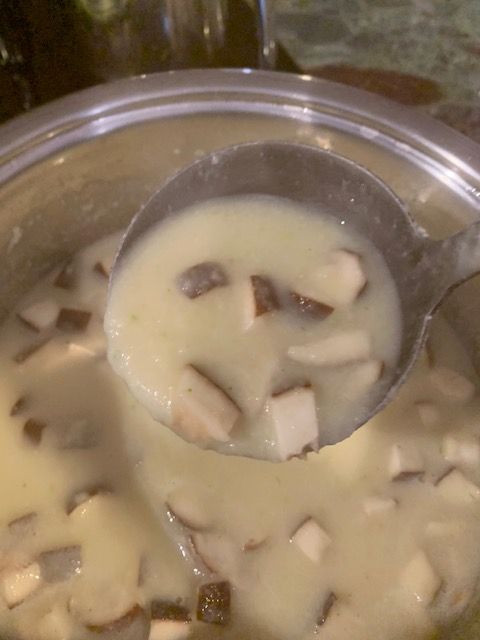
This is an unusual recipe for me to post but it was so good and so easy I wanted to share it.  If you like a creamy mushroom soup, try it!

So, you need some leftover cauliflower soup to make this.  Since I make the cauliflower soup frequently and often have leftover to last a day or two, this recipe  is easy for me.   I had some shiitake mushroom to use up so it all fell into place.  If you want your cauliflower soup to be extra “creamy” try adding a celeriac root.

Serves 2

1 quart of cauliflower soup

1/4 cup ghee

1 cup chopped shiitake mushrooms

Melt the ghee in a soup pot and allow it to get hot over medium heat for a minute or two .   Add the shiitake mushrooms.  Stir to coat the mushrooms–they will absorb the ghee so keep stirring for 3-4 minutes.  Add the cauliflower soup and bring to a simmer over medium heat.  Let it simmer for 10 minutes.  Add salt if desired.  Serve hot.

Filed Under: Monica's Recipes

Golden Milk made with Coconut Milk

November 25, 2019 by towers

A cup of this before a meal will warm you up, stimulate digestion, and act as an anti-inflammatory.  All of that and it is pretty tasty.  A serving is about 1/2 to 1 cup so this should serve 2-4.

1 tsp. ghee

1 tsp. turmeric powder

1/2 tsp. cinnamon powder

1/4 tsp. cardamom powder

1/2 tsp. ginger powder

pinch of ground black pepper

1/2 cup coconut milk (Native Forest is a good organic brand)

1  1/2 cups water or black tea of your choice

1-2 tsp. maple syrup or monk fruit powder to taste

Melt ghee in sauce pan.  Over medium-low heat, add spices and stir well until it browns lightly–just a minute or so.  Pour in coconut milk and stir well.  Continue to heat and add water or tea.  Add monk fruit powder to taste.  Serve hot.


Filed Under: Monica's Recipes

GF Brownies

November 25, 2019 by towers

Dense but not too sweet, these brownies will please most chocolate lovers.  They do contain sugar–but a reduced amount–so best to make them for special occasions.  The monk fruit powder is a good sweetener when you want to reduce the sugar in a recipe.  Be careful when you buy it though because many monk fruit products also contain erythritol.   I try to avoid the sugar alcohols as they can cause digestive disturbances.  If you don’t have palm oil, you could use coconut oil instead though I prefer the taste of the palm oil.

1/4  cup ghee

1/4 cup red palm oil

1/3 cup organic cacao powder

Organic baking chocolate (a piece about 1/2 inch wide by 4 inches long), Dakoba is a good brand

3 eggs, room temperature

1/2 cup organic coconut sugar or cane sugar

1/2 tsp. monkfruit powder, more to taste to increase sweetness

1/2 tsp. sea salt

1/2 tsp. baking powder

1 tsp. vanilla extract

1/3 cup coconut flour

1/3 cup tapioca flour

1/3 cup coconut milk

3/4 cups chopped walnuts

In a double boiler, melt oils and baking chocolate.  Remove from heat and add  cacao powder.  Set aside.

In a bowl, mix all dry ingredients and add beaten eggs and coconut milk.  Mix well.  Add cacao mixture and beat with an electric beater until smooth.  Fold in chopped nuts.

Spoon into a baking pan and bake at 350 degrees F for 15 minutes.  Insert clean knife in center and bake until knife comes out clean.  Let cool.  If desired, frost with a mixture of  4 Tbsp cacao powder, 2 Tbsp. honey, and 1-2 Tbsp. coconut milk (enough to form the desired consistency) with a dash of vanilla extract.  Serve warm or cold.


Filed Under: Monica's Recipes

Honey Mustard Dressing with or w/o Miso

November 20, 2019 by towers

The dressing makes a salad and it compliments salads containing bitter vegetables such as radicchio, arugula, dandelion leaves, and mustard greens.   Remember, the bitter tasting vegetables stimulate bile flow and aid digestion so be sure to use them in your salads and try to eat your salad at the beginning of your meal.  Enhance your salad’s general appeal by using at least half mild tasting lettuce such as romaine.  Also, avoid adding  tough/fibrous greens to your salads as these are better digested when they are cooked, marinated, or fermented  (this includes kale, collards, broccoli, cabbage, and cauliflower).  And, don’t be stingy with the dressing–pour a couple of tablespoons on!  The oil helps with absorption of the nutrients in the vegetables.

Try making the dressing with and without the miso–it’s delicious either way but there will be recipes that may be better without the miso taste.  Double or triple the recipe so you have enough in the fridge to last a week.


1 Tbsp. prepared yellow mustard

1 Tbsp. organic miso (I like the chickpea variety from MisoMaster)

1/4 cup apple cider vinegar (I have used the vinegar liquid from the marinated red onions which give a nice onion flavor.)

1-2 tsp. honey

1/2 cup extra-virgin olive oil

Place all ingredients except the oil in a jar and mix very well.  Add the olive oil and mix again.  The miso is salty so you should not have to add salt but you may wish to add some ground black pepper.  Pour on your salad just before serving.

Filed Under: Monica's Recipes

Holy Basil DIY

October 8, 2019 by towers

This powerful adaptogen herb is easy to grow, fragrant, attractive, loved by honeybees (so you are not just growing for your own benefit!),  easy to harvest, easy to dry, fun and easy to strip/store, and makes a yummy tea that you wouldn’t think would be highly medicinal!  What an olfactory experience that I totally enjoy!

Here are some volunteer baby plants near a mature plant.

I’ve posted a tea recipe previously but here I encourage folks to grow it themselves–even if you only have a patio or balcony, as long as you have at least half a day’s worth of direct sun, you can do it in a planter.  It can be started indoors in the Spring and planted outside once danger of frost is over– so you have until Spring to find some seeds (many seed catalogs have it–I prefer the “purple” variety).  Some nurseries carry the seedlings in the Spring but it is not that easy to find.  Here a few pictures that may inspire you.

I cut the plant at the base in late Summer or early Fall while there are still lots of green leaves but not too many flower spikes.  Then the plant can be hung upside down with some string in a dark, dry, warm area.  We have a shed that is perfect for drying.  After 3-4 weeks it will be thoroughly dry and the leaves will be ready for stripping.  In the photo above, notice several dried plants, the bowl of leaves that I stripped off the plants, and the bare plant that I discard–all on a sheet that makes it easy to gather loose leaves when you are cleaning up.

Here is the finished product–just the dried leaves.  I store them in a glass mason jars.  A gallon lasts me all year long until the next year’s harvest.  Great fun–give it a try!


Filed Under: Healthy Habits, Monica's Recipes

Marinated Red Onions

September 9, 2019 by towers

This recipe was posted previously embedded under the title  marinated vegetables.  If you haven’t tried it, you need to!  I wanted to bring more attention to it after reading about the benefits of onions in a mercola.com article.

There is a real benefit to making vegetables more digestible and sometimes more flavorful with marination and fermentation but what is really worth noting is that more nutrients and beneficial compound (e.g. quercitin in onions damaged by heat) are retained by this type of preparation because they are not heated.  Nice to have it confirmed by research such as that discussed in the mercola article.

Marinating is quicker (fermenting takes a few days) because it does not involve fermentation by lactic acid-producing microorganisms.   I like having the red onions available in my fridge.  It is very quick to make.  Be sure to use the vinegar in your salad dressing recipes–the flavor is a nice variation.  As for the onions, I use them in salads, as garnish on boiled eggs drizzled with olive oil, on gluten-free and dairy-free pizza, in guacamole, and other vegetables that have been steamed or sauteed. (Add the onions after removing from heat so as not to heat them).

Marinated Red Onions

1 large red onion, chopped fine
1/2 to 1 cup organic, raw apple cider vinegar
1 Tbsp. honey

Mix 1/2 cup of the vinegar with the honey in a mason jar (either a pint or quart-sized).  Add the chopped onions and stir well.  If the onions are not totally submerged in vinegar once you press then down with  a fork, add more vinegar until they are.  Cap and refrigerate.  Marinate for at least 8 hours before serving.  Keep refrigerated.

Filed Under: Monica's Recipes Tagged With: marinated red onion recipe

« Previous Page
Next Page »

Subscribe to get our Blog posts in your email.

* indicates required
/* real people should not fill this in and expect good things - do not remove this or risk form bot signups */

Intuit Mailchimp

(We don't spam or sell your email.)

Recent Posts

  • OFFICE CLOSED
  • Safer, Healthier Breast Screening in Roanoke
  • Enjoy Life Without Pain
  • Cleansing Tooth Powder
  • Signs of Parasites

Categories

Tags

arm and hand numbness avocado recipe avocado smoothie back pain breastfeeding latching problems butternut squash recipe coconut oil collard greens recipe cultured vegetables daikon radish recipe difficult neck movement dill sauerkraut eggplant recipe foot pain GAPS friendly GAPS friendly recipe gentle chiropractic adjustments gluten-free gluten-free recipe headaches headaches and chiropractic herb tea high fructose corn syrup hip pain how to cook collard greens immune system support jaw pain knee pain knee pain and chiropractic low back pain low back pain and chiropractic migraines neck pain neck pain and chiropractic treatment pesto recipe raw fudge sciatica scoliosis separated shoulder and chiropractic shoulder injury shoulder pain shoulder pain and chiropractic sweet potato soup vegetable juice weight loss

Good Nutrition

Cleansing Tooth Powder

This is a good way to add to the benefits of brushing your teeth with baking soda.  Make it convenient and mix some in a small jar and keep it in your bathroom.  Besides having stain-removing power … [Read More...]

  • Gluten-free Pesto Pizza
  • Warming Broth for a Cold
  • Oatmeal is Back

Children’s Adjustments

Children's chiropractic adjustment at Towers Chiropractic

Children with back pain

Children suffer injuries that lead to misalignments just as adults do. Children generally respond very well and quickly to gentle chiropractic adjustments. A case in point is that of a 5 year-old … [Read More...]

  • Adjusting Children

Towers Family Chiropractic

2302 Colonial Ave, SW, Ste A
Roanoke, VA 24015
(540) 343-6636

Our hours are:
Monday, Wednesday, Friday:
10:00am – 1:00pm and 2:00pm – 6:00pm
Tuesday, Thursday:
7:30am – 11:30am and 12:30pm – 4:00pm
Saturday:
9:00am – 12:00pm

These statements have not been evaluated by the Food and Drug Administration. The information on this website is not intended to treat, diagnose, prevent, or cure any disease.

Copyright © 2025 · Towers Family Chiropractic by Soupbone Creative